
Download this explainer as a Word document
Download this explainer as a pdf
We want to ensure that new regulations for mobility aids and micromobility devices will open up everyday, human-scale journey-making to as many Disabled people as possible.
Currently, confusion between different regulatory areas where mobility aids are divided into classes is resulting in risk to Disabled people through incorrect advice and misunderstandings.
There are three important different sets of regulations and standards where mobility aids are divided into similar-sounding classes:
- UK highways regulations,
- Medical devices regulations and
- The main British Standard for powered mobility aids.
This sheet explains the three main different types of mobility aid class in regulations and product safety standards.
1. Summary
a) Mobility aids which are only intended for use by Disabled or mobility impaired people may be registered with MHRA as class 1 medical devices.
b) Under UK highways regulations, some weight-bearing mobility aids are class 1, 2 or 3 “invalid carriages”.
c) Under British Standard BS EN 12184:2022, some powered, weight-bearing mobility aids are product safety tested as class A, B or C aids.
d) Safe, widely-recognised mobility aids used by Disabled people may be classed within none, any one, any two or all three of the above systems.
e) Some mobility aids used by Disabled people meet different regulatory classes or standards, for example meeting criteria for regulation as pedal cycles or EAPCs. We consider cycle and EAPC regulation largely a good practice low-restriction framework.
2. The issue – why do these different classes need disentangling?
We’re seeing incorrect or misleading advice being provided through lack of understanding of these regulatory and standards classifications. For example, advice given sometimes:
- Wrongly states specific devices may not be used on carriageways unless there is no footway, restricting Disabled people’s ability to make safe mobility choices;[i]
- Wrongly states a device is in a specific “invalid carriage” class, giving incorrect information about how and where a device may legally be used;[ii]
- Wrongly states specific devices are legal for pavement use; [iii]
- Wrongly states specific devices can be relatively easily registered for legal highways use;[iv]
- Wrongly assumes that any device that meets product safety standards is legal for highways use.
This is putting Disabled people at risk of having our mobility aid use and charging restricted, having essential mobility aids confiscated [v] and even of prosecution.
3. Medical device regulations and mobility aids
Medical devices are regulated under The Medical Devices Regulations 2002[vi] including Annex IX of Directive 93/42 (last updated 31/12/2020)[vii]
They are separated into classes 1, 2a, 2b and 3.
- Powered and unpowered mobility aids that are intended specifically for use by Disabled people or those with difficulty walking are often registered and regulated as class 1 medical devices.[viii]
All medical device regulated mobility aids in class 1 because they are non-invasive and do not meet any of the exclusion criteria in Annex IX above. We do not think that any mobility aids meet criteria for medical devices classes 2a, 2b or 3.
Medical devices are regulated[ix] by the Medicines and Healthcare Products Regulatory Agency (MHRA).[x]
4. UK highways regulations and mobility aids
“Invalid carriages” are defined in The Chronically Sick and Disabled Persons Act (1970) (s20)[xi] and The Use of Invalid Carriages on Highways Regulations (1988)[xii]
“Invalid carriages” are separated into classes 1, 2 and 3.
- Class 1 “invalid carriages” are unpowered – largely manual wheelchairs.
- Class 2 “invalid carriages” are powered, with maximum speed up to 4mph (6.4kph).
- Class 3 “invalid carriages” are powered, with maximum speed up to 8mph (12.9kph).
A range of additional restriction criteria apply to all “invalid carriages” – see resources on our Every Journey, Everyone page and main resources page for further information.
Any fully weight-bearing, wheeled mobility aids that do not meet all the class 1, 2 or 3 “invalid carriages” classification requirements are “not in class” and are not legal for use in pedestrian public spaces in the UK.
Invalid Carriages regulations are highways regulations largely or entirely under the remit of the Department for Transport.
5. Product safety standards and mobility aids
Most electrically powered wheelchairs, mobility scooters, power-assist and add-on systems can be tested for product safety using British Standard BS EN 12184:2002. [xiii]
Powered aids tested within this standard are separated into classes A, B and C.
- Class A are powered aids with maximum speed up to 15kph (9.3mph) for flat, even surfaces up to 3° (~1:20) slope. [xiv]
- Class B are powered aids with maximum speed up to 20kph (12.4mph) for moderately uneven surfaces up to 6° (~1:10) slope. [xv]
- Class C are powered aids with maximum speed up to 20kph (12.4mph) for uneven terrain up to 10° (~1:6) slope. [xvi]
Multiple different product safety standards can apply to one device. In some situations for some products, meeting relevant British Standards, EN or ISO standards is mandatory. Finding out which situations these are can be difficult.
British Standards and almost all other standards including EN and ISO standards are copyrighted and costly to purchase, essentially barring most Disabled people and DPOs from finding out how our mobility aids should perform.
Costly British Standards and standards produced by international bodies are sometimes required for products or uses of products to meet UK legislation. This makes it impossible for most members of the public and small organisations to check if products or uses of products comply with legal requirements.
British Standards are developed by BSI, the UK’s national standards body. BSI is a member of international standards bodies meaning it has influence towards ISO, IEC and EN standards.[xvii]
6. Example: Janine’s mobility aids and their classes
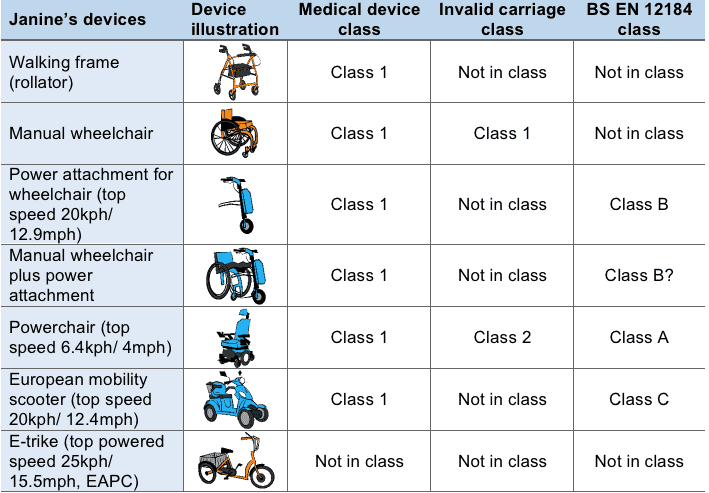
Like many Disabled people, Janine [xviii] uses a range of mobility aids to meet her mobility needs in different situations. Janine uses a walking frame (rollator), a manual wheelchair, a wheelchair power attachment, a powerchair, a large European mobility scooter and an e-trike.
The table below shows the classes these devices belong to in Janine’s case, as examples for understanding: slight differences in device functions and choices about registration and testing made by manufacturers can lead to very similar devices being in different classes.
References
[i] https://www.gov.uk/mobility-scooters-and-powered-wheelchairs-rules/driving-on-the-road We believe that this guidance implying that class 2 “invalid carriages” may not be driven on carriageway is very likely to be incorrect. Please see our Guide to Mobility Aids and further My Mobility discussion sheets.
[iii] 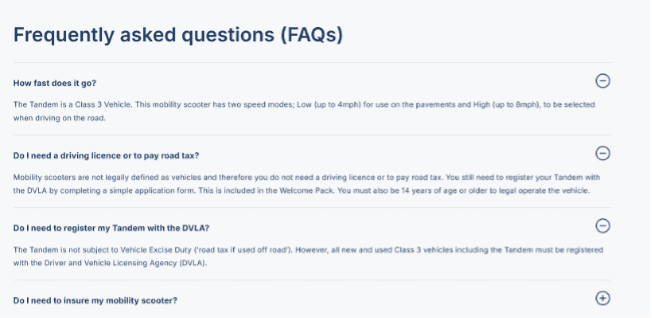
E.g. https://www.johnpreston.co.uk/blog/post/what-are-the-laws-on-use-of-wheelchair-power-attachments
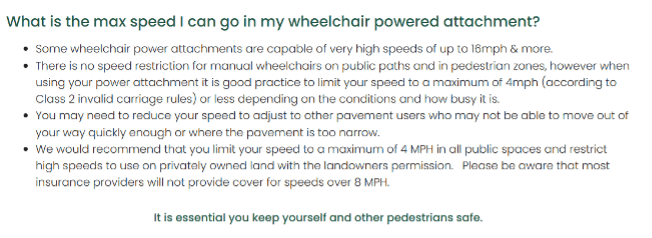
[iv] https://monarchmobility.com/blog/using-your-powerchair-the-rules-explained/
[v] https://www.salamandernews.org/police-impound-disabled-mans-wheelchair-3-weeks/
[vii] https://www.legislation.gov.uk/eudr/1993/42/annex/IX
“A manufacturer sells 2 different kinds of portable wheelchairs: a self-propelled wheelchair intended for use by people with disabilities or difficulty in walking and another that is intended to be used by hospital porters to transport patients around the hospital.
The first is a medical device because there is a clear link between the corrective function (compensation for injury or disability by providing a mode of transportation) and the individual (persons with disabilities or difficulty in walking).
The second wheelchair is not a medical device because although the purpose is also to provide transportation, it is not specifically intended to be used only by those with disabilities or difficulty walking. It is an aid for the porter to transfer anyone around the hospital quickly and safely.”
[ix] https://www.gov.uk/guidance/regulating-medical-devices-in-the-uk
[x] https://www.gov.uk/government/organisations/medicines-and-healthcare-products-regulatory-agency
[xi] https://www.legislation.gov.uk/ukpga/1970/44/section/20
[xii] https://www.legislation.gov.uk/uksi/1988/2268
[xi ] See BS EN 12184:2022 p11 and further information p40 table 3
[xv] ibid
[xvi] ibid
[xviii] https://www.bsigroup.com/en-GB/about-bsi/national-standards-body/ “BSI is the UK national member of the standards bodies ISO, IEC, CEN, CENELEC and ETSI, enabling UK influence to ISO, IEC & EN standards.”
[xviiii] Janine is a fictional composite based on real people.