Climate action must include Disabled people
How Wheels for Wellbeing Supports the Environment
At Wheels for Wellbeing, environmental sustainability and disability inclusion go hand in hand.
Cycling is often promoted as a low-carbon way to travel, exercise and connect with communities. But too often, Disabled people are left out of active travel , cycling infrastructure and environmental conversations.
We are working to change that.
Through our inclusive cycling sessions, led rides, campaigns, consultancy and advocacy, we help make low-carbon movement accessible to more people. We believe climate action must be inclusive, and that sustainable transport only works when it works for Disabled people too.
Making Low-Carbon Movement Inclusive
Our cycling sessions give Disabled people access to the joy, freedom and wellbeing of cycling in a safe and supportive environment.
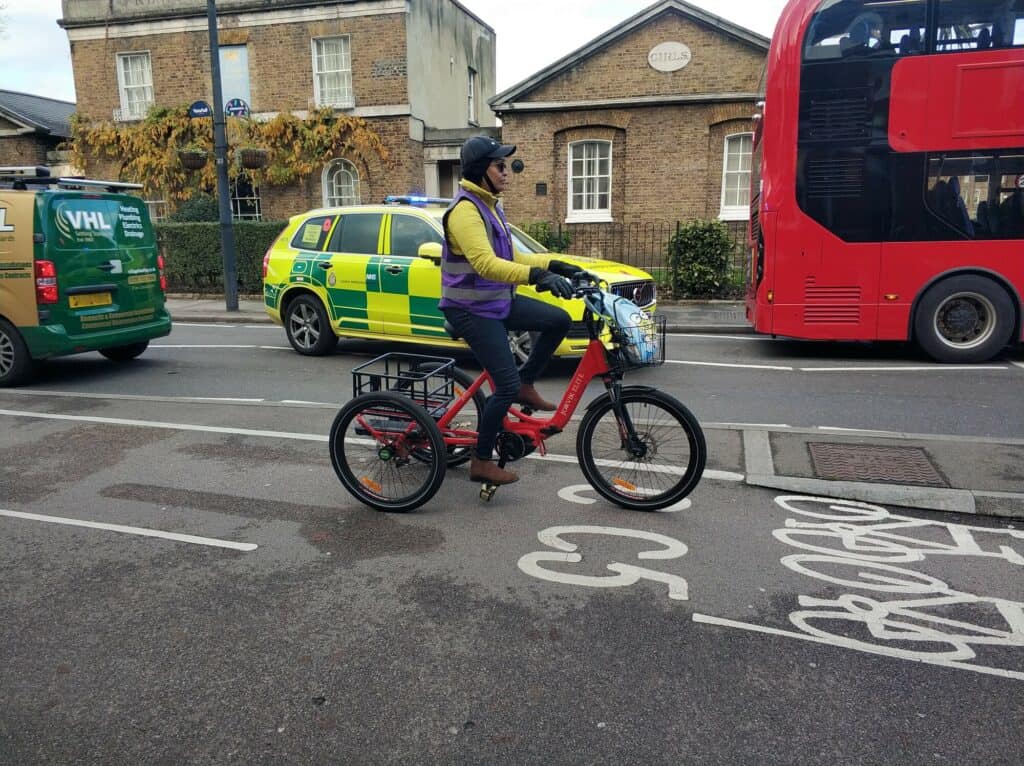
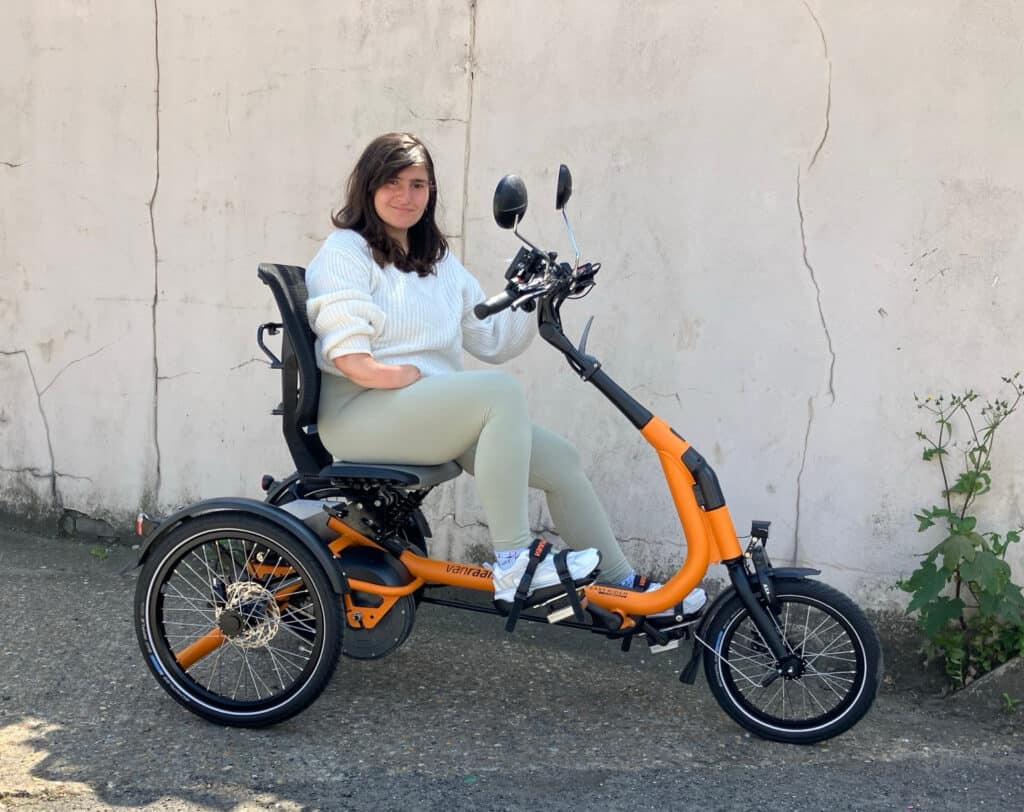
Many of the people who attend our sessions would not be able to take part in mainstream cycling opportunities. They may need adapted cycles, non-standard cycles, specialist support, traffic-free spaces, or simply the confidence that cycling is possible for them.
By making cycling accessible, we help more Disabled people take part in low-carbon activity, leisure, exercise and, where possible, everyday journeys.
Local Sessions, Lower-Carbon Access
We deliver inclusive cycling sessions locally in South London, helping reduce the need for Londoners to travel long distances to access accessible cycling opportunities.
Around 90% of our users travel to sessions by bus or on foot. This shows that local, inclusive provision can support low-carbon access to physical activity, while reducing reliance on private cars.
For children, families, schools and local residents, nearby sessions can make a real difference. When inclusive cycling is available locally, people are more likely to be able to walk, wheel or use public transport to attend.
Building Opportunities for Active Travel
Our sessions are often the first step into cycling for Disabled people.
Participants can try adapted and non-standard cycles, build skills, gain confidence and experience cycling in a way that works for their body, energy, access needs and pace.
For some people, this can lead to cycling beyond our sessions. Our led rides support more confident cyclists to move from traffic-free spaces onto quiet roads and local cycling routes, creating a pathway towards more independent cycling where this is safe, realistic and accessible.
Supporting Disabled Children and Young People
Our children’s sessions help Disabled children and young people experience cycling from an early age.
This matters for the environment as well as for equality. If Disabled children are excluded from cycling when they are young, they are less likely to see cycling as something that belongs in their future.
By giving children, families and schools access to inclusive cycling, we help build a culture where low-carbon movement is possible for Disabled children too.
Making Active Travel Infrastructure Inclusive
Our environmental work goes beyond our sessions.
Through our campaigns, policy work, consultancy and training, we support inclusive cycling infrastructure and accessible public spaces. We help councils, transport bodies and other organisations understand how walking/wheeling and cycling routes can be designed so they work for Disabled people, including people using adapted and non-standard cycles, wheelchairs and mobility aids. .
We advocate and help design active travel schemes that are accessible from the start, rather than creating barriers that later need to be fixed. We help develop local, regional and national policies, strategies, regulations, and enforcement measures that support inclusive, active and multi-modal transport.
Green Infrastructure That Works for Everyone
Environmental improvements must be designed with access in mind.
Our guidance and consultancy support active travel schemes that include green infrastructure, planting, street trees, shade, sustainable drainage, seating and climate-resilient public spaces.
These features can improve air quality, reduce flooding, provide shade, support biodiversity and make streets more pleasant. But if they are poorly designed or badly maintained, they can also create barriers for Disabled people.
We work to ensure that greener public spaces remain accessible, safe and usable for everyone.
Reducing Waste in Our Own Operations
We are also reducing the environmental impact of how we work.
We maintain and reuse adapted and non-standard cycles where it is safe and appropriate, helping extend the life of specialist equipment and reduce unnecessary waste.
We have also substantially reduced paper use by moving most routine processes, records and documents online. Our office no longer keeps a larger printer because printing is now rarely needed. Where paper or alternative formats are needed for accessibility, we continue to provide them.
We also reduce transport demand by operating a distributed remote-working team, avoiding the need for commutes to/from the office, while roles that involve visiting venues around the country are increasingly being covered by a team member who is relatively close, rather than requiring a journey between London and the venue for what would previously have been a London based staff member. These journeys are normally made by public transport and cycling, only resorting to car travel when there is no accessible way to get to and from our destination.
Developing Stronger Environmental Evidence
We are not yet making quantified carbon reduction claims, but we are developing better ways to measure and evidence our environmental impact.
This includes looking at:
- how people travel to our sessions
- whether local sessions reduce the need for car journeys
- whether participants gain confidence to cycle beyond sessions
- how our led rides support local active travel
- how we maintain, repair and reuse cycles
- how our consultancy and campaigns support inclusive, sustainable transport
- How our team, when needed travel by public transport and/or cycle when going to work or attending events
- how our internal processes reduce paper use and waste
By collecting this data, we will be able to better demonstrate how inclusive cycling contributes to low-carbon access, sustainable communities and climate action that does not leave Disabled people behind.
Our Commitment
We believe environmental action must be fair, practical and inclusive.
A sustainable transport system cannot be truly sustainable if Disabled people are excluded from it. Wheels for Wellbeing works to make sure Disabled people are part of the move towards cleaner, greener and more accessible communities.
Inclusive cycling is climate action. Accessible active travel is environmental action. Disabled people must be part of both.