What is our campaign about?
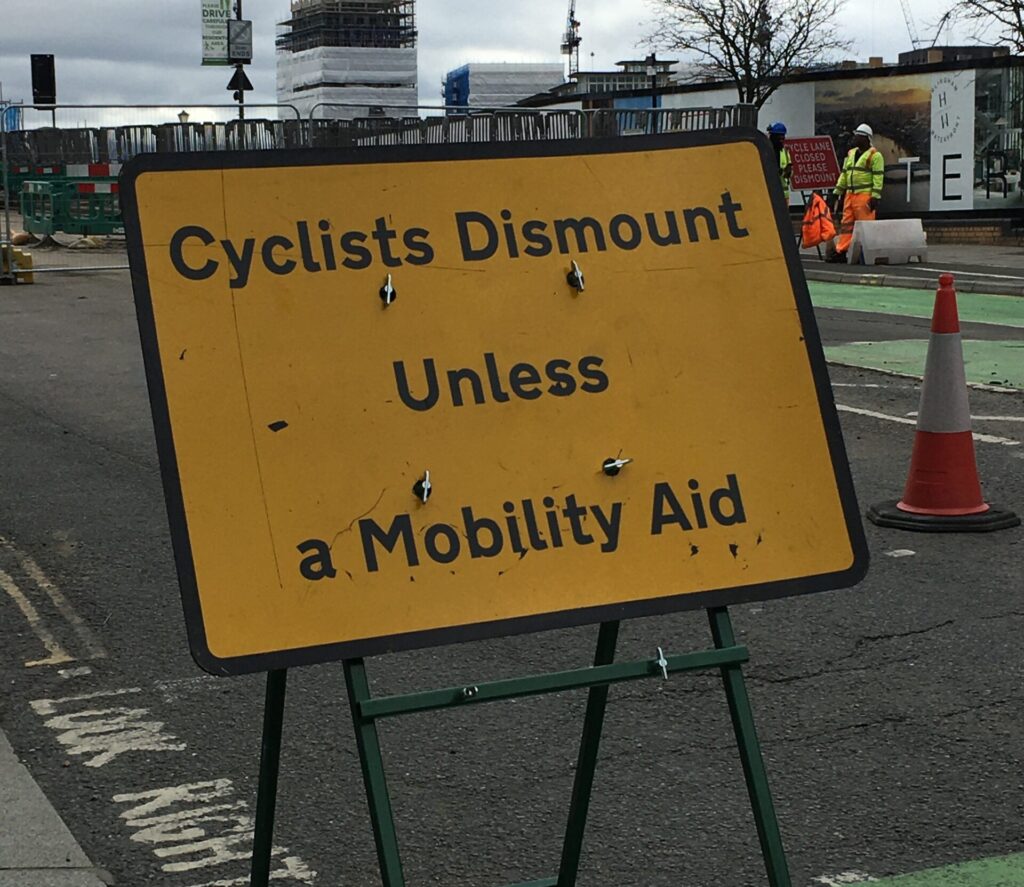
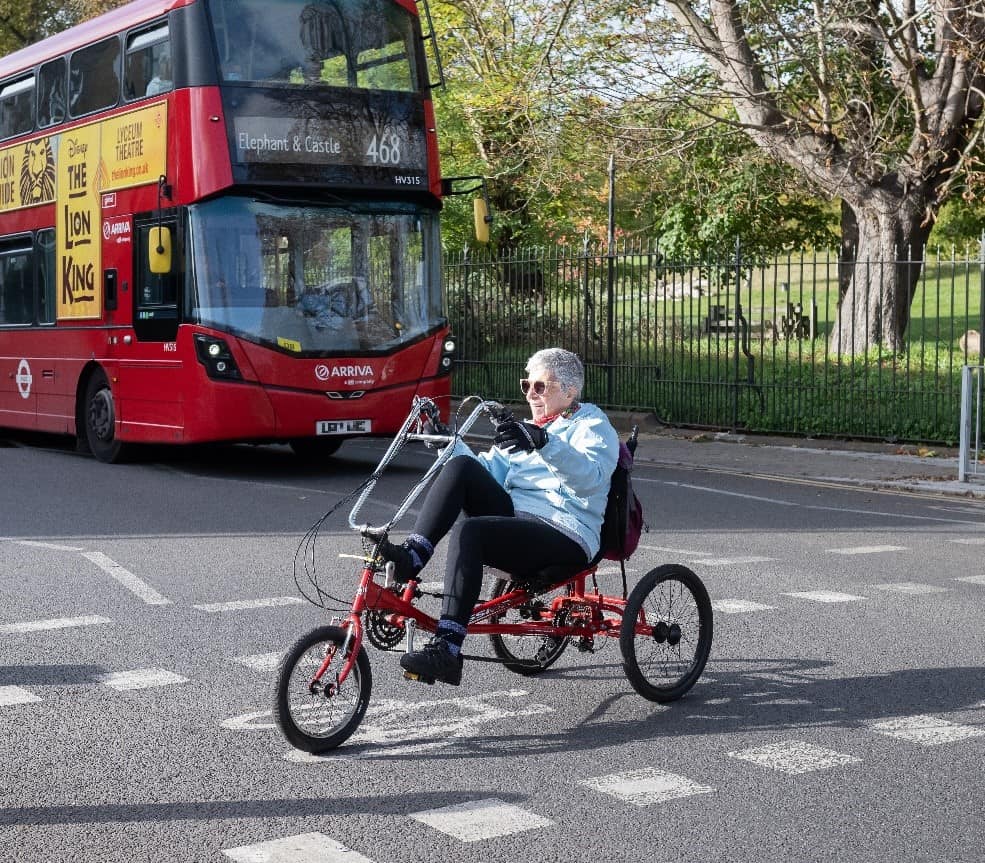
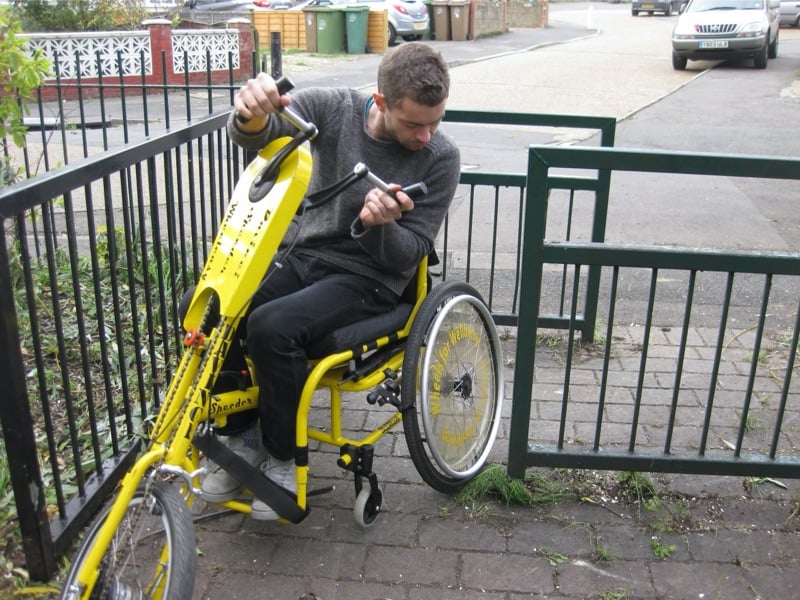
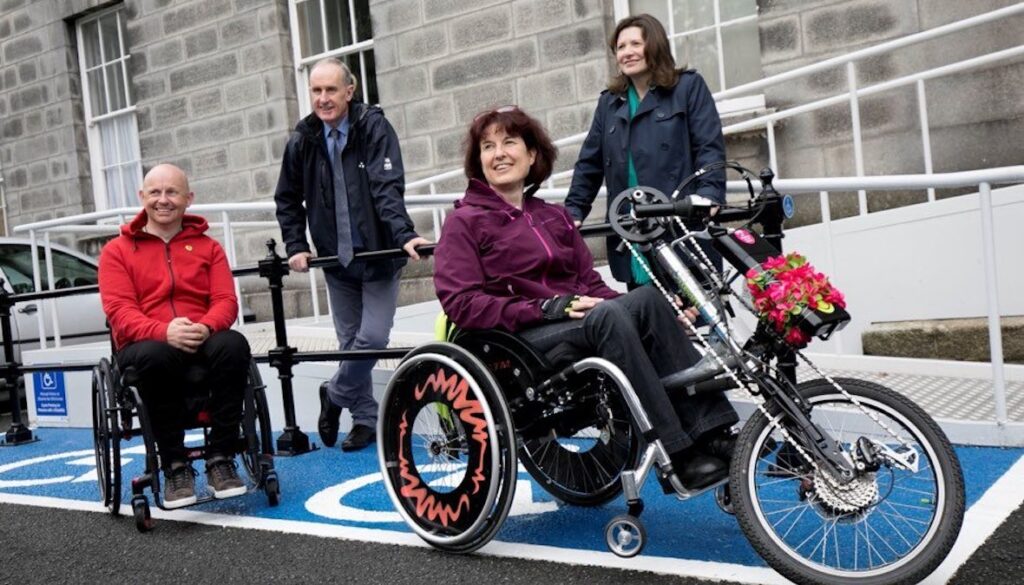
One of the biggest barriers to more Disabled people taking up cycling is the general assumption that Disabled people can’t or don’t cycle. This is manifested in the lack of inclusive cycling imagery and language, and is particularly pronounced in cycling policy imagery (photos, pictures and diagrams) where there is a severe lack of images of non-standard cycles.
To give an example, in one audit that we carried out of London Borough cycling strategies in 2016, we found that only 2% of all images of cycles were of a non-standard cycle (which included cargobikes). Furthermore, whilst there are welcome efforts to broaden the representation of cyclists away from athletic white males, this has generally led to increased images of women, people from BME backgrounds and young children – older and Disabled people, however, tend to remain invisible.

How can you get involved?
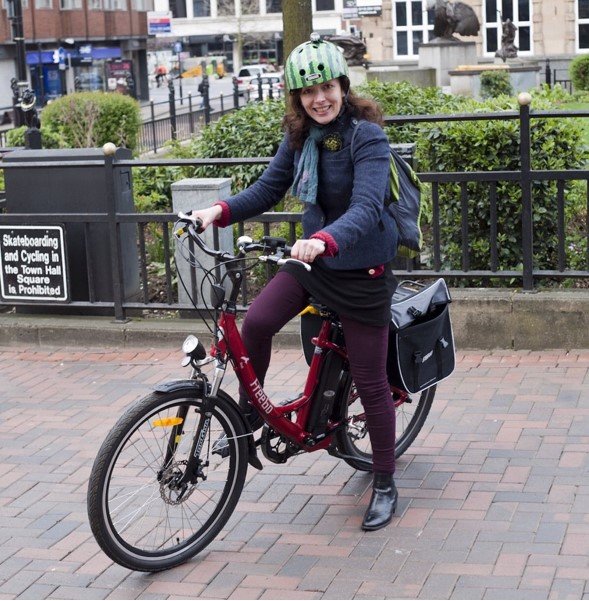
Seeing is believing. We need more images of Disabled people cycling in a range of environments, to show politicians and policymakers that Disabled people can and do cycle, and to encourage more Disabled people to take up cycling!
If you have a photo of you and your non-standard cycle (or bicycle) and are happy for us to use this in our campaigning work, please send it to info@wheelsforwellbeing.org.uk using “Image photo bank” as the subject line. We’ll add your photo(s) to our photo bank, where they will be appropriately stored and categorised, and will only use them for campaigning and communications purposes.
What are we doing to change this?
We are working closely with local authorities to ensure they are doing more to promote the visual inclusivity of Disabled cyclists. Specifically, we are calling for 1 in 5 images of cycles depicted in cycling strategies to be of a non-standard cycle – proportionate to the number of Disabled people in the UK (20%). We are also working with partners to create and make available a photobank of inclusive cycling imagery for use by all who use images of cyclists.
We also undertake research into the visual under-representation of Disabled cyclists, and have previously co-authored an academic paper on this issue.
What Disabled cyclists have said:
“Visual images representing cyclists often depict competition and sport rather than mobility, utility and transport, and fail to include the variety of trikes, handcycles, tandems and tag-alongs which can make cycling a possibility whatever your impairment”